The Florida Panther is one of the most iconic animals of Big Cypress
The freshwaters of the Big Cypress Swamp, essential to the health of the neighboring Everglades, support the rich marine estuaries along Florida's southwest coast. Conserving over 729,000 acres of this vast swamp, Big Cypress National Preserve contains a mixture of tropical and temperate plant communities that are home to diverse wildlife, including the Endangered Florida panther.
Size: 30,225 acres as of 2/27/2026, 6:15pm Containment: 0% Cause: Unknown, Under Investigation Location: 25 miles east of Naples, Florida; south of I-75, east of SR-29. Start Date: February 22, 2026 Resources: 14 engines, 3 water tenders, 4 helicopters, 3 single engine airtankers (SEATs). Total Personnel: 154
Size: 25,780 acres Location: 25 miles east of Naples, Florida; south of I-75, east of SR-29. Start Date: February 22, 2026 Cause: Unknown, Under Investigation Containment: 0% Resources: 14 engines, 3 helicopters, 3 Single Engine Airtankers (SEATs). Total Personnel: 120
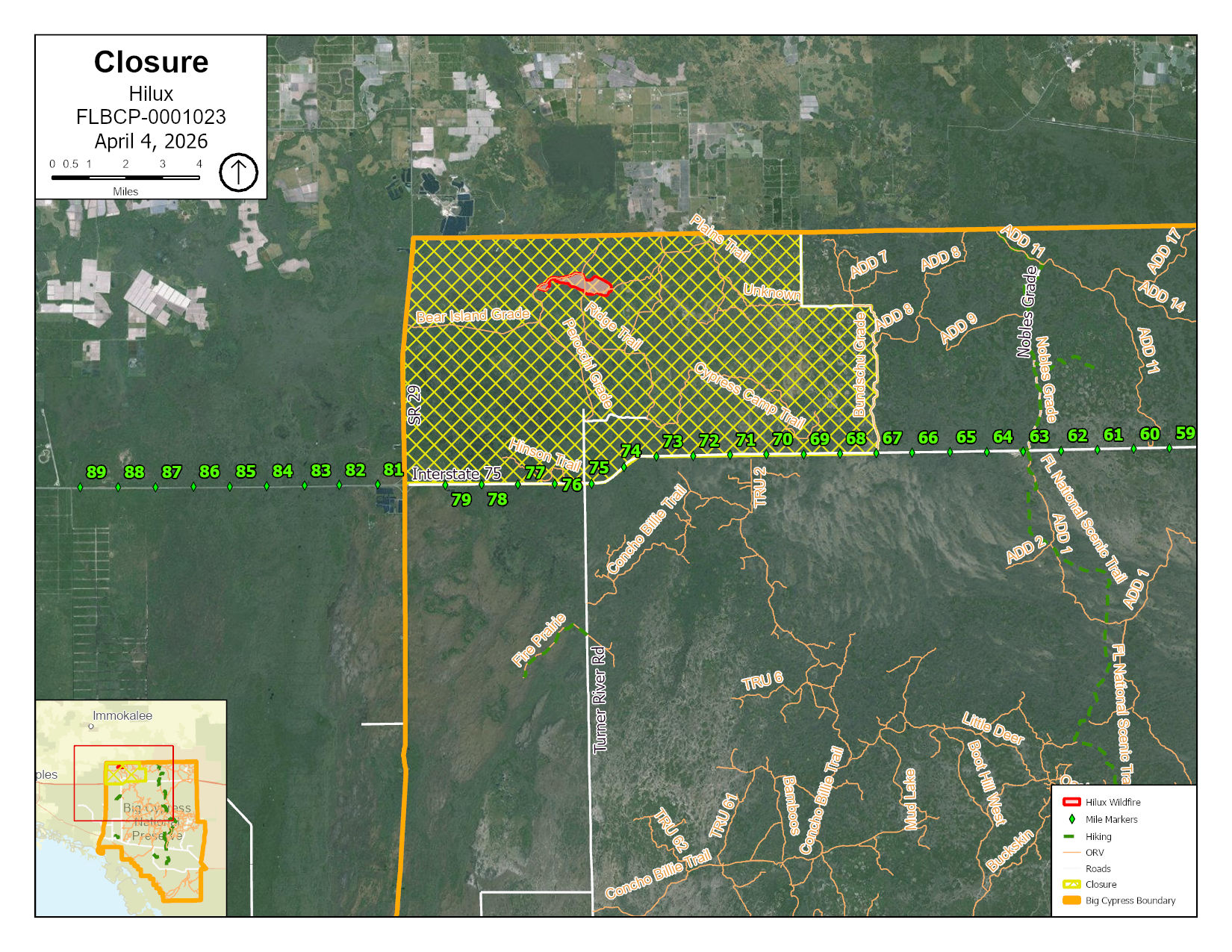
OCHOPEE, FL – Big Cypress National Preserve has issued an amendment to the area closure issued on February 23. The amended closure is in effect immediately and includes all areas and trails within the closure perimeter, as well as perimeter roads within the preserve. During the closure, all recreational use including off-road vehicles, hiking, camping, hunting and commercial activities are prohibited in the designated areas. This amended closure re-opens Burns Lake Campground for reservations and day use.
OCHOPEE, Fla. – The National Fire remains active as persistent drought conditions and widespread frost-killed vegetation continue to create an unusually heavy and highly receptive fuel bed. Ground crews continue to conduct defensive firing operations along the southern portion of the fire to help establish a perimeter. Aviation resources supported suppression efforts by conducting aerial firing operations to eliminate interior pockets of unburned fuel.
OCHOPEE, Fla. – Ongoing wildfire activity within Big Cypress National Preserve continues to expand due to persistent drought conditions and recent frost damage that has created an unusually heavy and highly receptive fuel bed. Dry vegetation combined with accumulated frost-killed fuels is contributing to active fire behavior across the preserve.